Are you scrolling through Beverly Hills listings and wondering what all those tile roofs, glass walls, and grand staircases actually mean for value? You are not alone. In this market, style is not just about looks. It shapes your buyer pool, guides renovation choices, and ultimately influences your pricing strategy. In this guide, you will learn how to identify the most common Beverly Hills home styles, what buyers value in each, and how to present or shop strategically. Let’s dive in.
Why style matters in Beverly Hills
Beverly Hills blends classic glamour with cutting-edge modern design. You will find Spanish and Mediterranean estates in the Flats, mid-century gems in Trousdale Estates, traditional homes along tree-lined streets, and contemporary new builds in the hills and edges of Beverly Hills Post Office. Each style signals a lifestyle and draws a different buyer profile.
Style also affects value perception. Authentic period details, clean sightlines, and indoor and outdoor flow can elevate a property, while mismatched remodels can narrow your buyer pool. When you understand style, you can select better comps, choose smarter updates, and market to the right audience.
Mid-century modern
Era and local context
Built mostly from the 1940s through the 1960s, mid-century modern is a Beverly Hills staple, especially in Trousdale Estates, where homes were designed to showcase panoramic hilltop views.
How to spot it
- Horizontal or low-pitch rooflines and thin eaves
- Floor-to-ceiling glass, clerestory windows, and open façades
- Post-and-beam construction and minimal ornament
- Carports or flat, integrated garages
Inside, look for open plans, built-in cabinetry, terrazzo or hardwood floors, and strong indoor and outdoor flow.
What buyers value
Design-conscious buyers and collectors prize authenticity. Original sightlines to the landscape, preserved glass walls, and period hardware can command a premium. Overly heavy remodels that close off glass or add fussy ornament often reduce appeal.
Renovation and presentation tips
- Update building systems first, including HVAC, electrical, plumbing, and seismic, with minimal visual impact
- Keep finishes neutral to emphasize light and space
- Use architecture-aware photography to highlight views and indoor and outdoor connections
- Consider reintroducing period-appropriate fixtures instead of generic replacements
Listing language to consider: “Architectural mid-century,” “Trousdale,” “floor-to-ceiling glass,” “indoor and outdoor living,” “clean lines,” “view property.”
Modern and contemporary
Era and local context
Contemporary builds and transformative renovations from the 2000s to today aim for minimalist lines, expansive glazing, and tech-forward luxury. These estates appear across Beverly Hills, including hillside lots with terraces and pools.
How to spot it
- Flat or simple rooflines and rectilinear volumes
- Large glass expanses and seamless indoor and outdoor areas
- Simple palettes like stucco, concrete, glass, and metal
Inside, expect great rooms, high ceilings, chef kitchens, spa baths, integrated smart systems, and dedicated spaces like theatres and fitness rooms.
What buyers value
Turnkey convenience and current aesthetics drive demand. These homes can earn high prices per square foot, although some traditional buyers prefer classic styles.
Renovation and presentation tips
- If you own an older home, decide whether targeted updates, such as the kitchen, baths, and systems, achieve your goals instead of a full overhaul
- In marketing, highlight functional luxury, like indoor and outdoor entertaining zones and smart features
- Commission architectural photography that captures clean sightlines and daylight
Listing language to consider: “Contemporary estate,” “architect-designed,” “state-of-the-art systems,” “indoor and outdoor living,” “turnkey.”
Spanish Colonial Revival
Era and local context
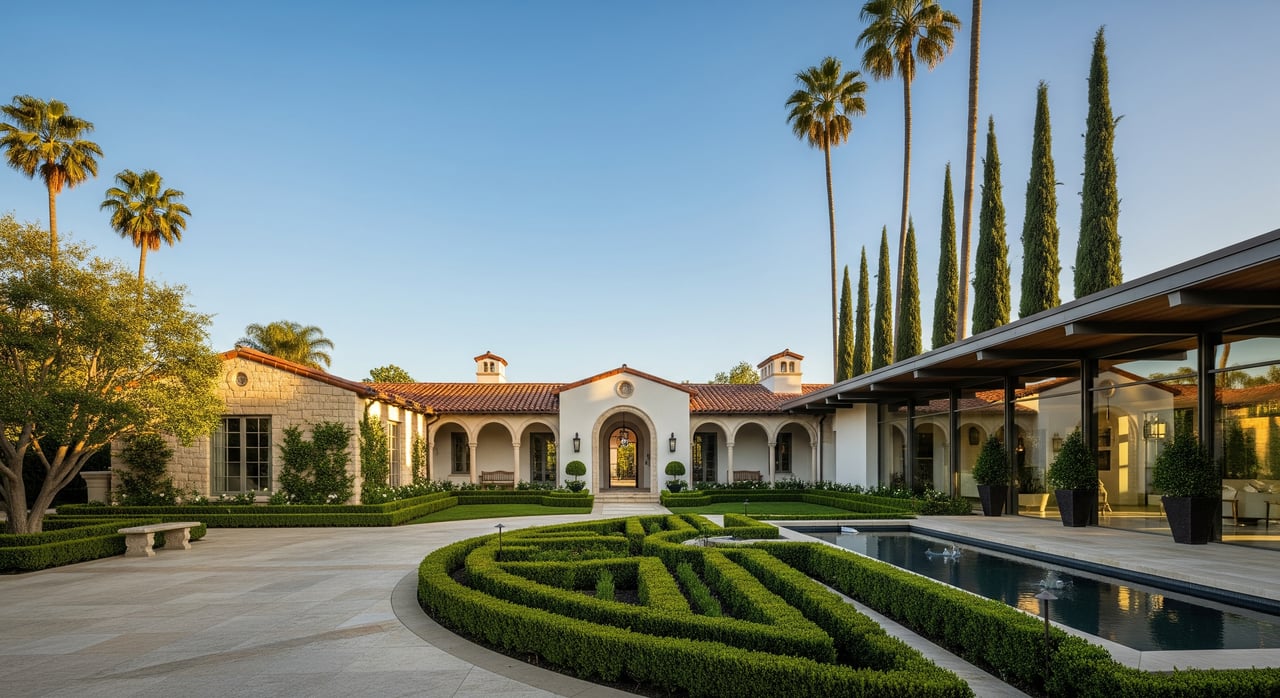
Popular from the 1910s through the 1930s and often revived later, Spanish Colonial Revival is a Beverly Hills favorite, especially in the Flats, where old-world character meets courtyard living.
How to spot it
- Stucco walls and red clay tile roofs
- Asymmetrical façades with arched doors and windows
- Wrought iron details and decorative tile
- Courtyards and intimate outdoor spaces
Inside, look for plaster walls, exposed beams, arched openings, and colorful tile at stairs and baths.
What buyers value
Buyers who love classic Southern California charm value privacy, courtyards, and intact period details. Sensitive restorations that maintain tile, ironwork, and plaster often attract more interest.
Renovation and presentation tips
- Preserve original tile, plaster, and ironwork where possible
- Upgrade mechanical systems while protecting finishes
- Stage with warm textures that complement wood beams and tile
- Showcase courtyards and gardens as lifestyle amenities
Listing language to consider: “Spanish Colonial,” “courtyard,” “red tile roof,” “arched details,” “period charm.”
Mediterranean and Italianate
Era and local context
Mediterranean and Italianate estates rose in the early to mid 20th century and often read larger and more formal. In Beverly Hills, they commonly feature terraced gardens and grand entertaining spaces.
How to spot it
- Stucco walls, terra-cotta roofs, arches, and loggias
- Balanced or symmetrical massing with balconies and columns
- Ornamental stonework and formal landscaping
Inside, expect tall ceilings, ornate moldings, tiled public areas, and grand staircases.
What buyers value
Traditional luxury buyers favor curb presence and formal entertaining. Restored historic elements paired with manicured grounds can drive value.
Renovation and presentation tips
- Maintain formal circulation and scale
- Modernize kitchens and baths while protecting proportions and details
- Highlight gardens, terraces, and pools in both staging and photography
Listing language to consider: “Mediterranean villa,” “formal entertaining,” “loggia,” “grand staircase,” “gardens.”
Traditional, including French, Georgian, and Tudor
Era and local context
Traditional styles span early to mid 20th century revival homes and newer bespoke builds. You will see Georgian symmetry, Tudor steep roofs and half-timbering, and French Provincial stonework and mansards.
How to spot it
- Georgian: symmetrical façades and classical details
- Tudor: steeply pitched roofs and decorative half-timbering
- French: mansard roofs and formal stone accents
Interiors often include formal living and dining rooms, fireplaces, and detailed millwork. Some have modernized, hybrid layouts.
What buyers value
Classic luxury buyers appreciate provenance, craftsmanship, and an established neighborhood feel. Well-kept traditional homes in prime locations remain in steady demand.
Renovation and presentation tips
- Emphasize quality millwork, moldings, and masonry in your marketing
- Modernize flow and service areas without erasing formal rooms
- Stage to show day-to-day comfort alongside elegance
Listing language to consider: “Classic estate,” “French provincial,” “Tudor,” “timeless,” “formal rooms.”
How style shapes value and demand
Buyer pools differ by style, so identify your target early and tailor everything to them. For a contemporary estate, lead with tech, wellness spaces, and turnkey convenience. For Spanish or mid-century homes, spotlight period tile, ironwork, and original glass.
Choose comps carefully. Whenever possible, use comparable sales from the same style and era in the same micro-market. Adjust for view corridors, lot size, pool, privacy, guesthouses, and hills versus Flats location.
Authenticity matters. Preserved period character in good condition typically enhances value, while surface-level “styling” that ignores layout or systems can depress it. If you are weighing a full style conversion, factor in neighborhood norms, cost, permitting, and potential buyer resistance before you commit.
High-impact improvements tend to include system upgrades, high-quality kitchen and primary bath renovations, indoor and outdoor enhancements, and restoring signature elements such as original mid-century windows, Spanish tile, or traditional moldings.
Fast listing evaluation checklist
Use this quick photo-first approach to gauge a home’s style and potential.
- Exterior: roof type and pitch, stucco or stone versus glass, presence of courtyards or loggias, terraces and pool setup, and view orientation
- Interior: ceiling heights, openness of floor plan, condition of kitchen and baths, and presence of original details such as built-ins, tile, or millwork
- Systems and structure cues: visible HVAC or electrical panels, window condition, any water staining, and the apparent age of mechanicals
- Property context: lot size and slope, privacy hedging, guesthouse or ADU potential, and how outdoor spaces connect to interiors
Renovation priorities by goal
If you are selling a period home quickly: preserve signature details, complete neutral cosmetic updates, confirm systems are safe and current, and invest in landscape lighting and professional photography.
If you are planning a major renovation or rebuild: review neighborhood precedents, confirm planning and design review needs, obtain cost estimates, and consider holding time versus market appetite for the end style.
If you are buying to renovate: budget for hidden costs such as structural or seismic work and older systems, decide which character elements are salvageable, and verify permit history and any expansion limits.
For sellers, consider deploying design-appropriate updates with support that aligns to your timeline. If you want to front-load value, ask us how renovation financing and pre-market strategy can position your listing for maximum reach and impact.
Pricing and marketing with a style-first plan
Architectural homes deserve architecture-aware marketing. Use photographers who understand sightlines and roof silhouettes, schedule golden-hour exterior shots, and plan editorial-style tours that show indoor and outdoor flow. The right language and visuals help the right buyers connect with your home’s identity.
As a tech-forward Compass team, we pair modern marketing with hands-on guidance. That includes professional photography, virtual tours, and strategic distribution that reaches design-minded buyers while protecting your value. When your home’s style is clear, your pricing, staging, and exposure can work in sync to deliver stronger outcomes.
Ready to talk strategy for your Beverly Hills home or purchase? Connect with Justin Dutchover Real Estate for a tailored plan.
FAQs
How do I tell true mid-century from a later modern remodel?
- Look for post-and-beam framing, original built-ins and hardware, and preserved sightlines to the landscape, while later remodels often add heavy, boxy elements or reduce glass.
Will restoring period details increase my sale price in Beverly Hills?
- Sensitive restoration often boosts buyer interest and perceived value among authenticity-focused buyers, although the premium varies by neighborhood and buyer pool.
Do I need permits to change a distinctive façade in Beverly Hills?
- Plan for local planning and design review, and check for any historic or preservation constraints before significant exterior changes.
Which renovations deliver the best ROI in Beverly Hills luxury homes?
- High-quality kitchen and primary bath updates, system upgrades such as HVAC and electrical, indoor and outdoor improvements, and style-appropriate restoration tend to be most impactful.
How should I pick comps for a distinctive architectural home?
- Prioritize sales with similar style, condition, and setting, such as view orientation, lot size, privacy, and neighborhood; explain adjustments when perfect matches are scarce.