Wondering what it’s really like to live on one of Venice’s walk streets? These blocks stand apart from most Los Angeles streets because your front door opens to a pedestrian path instead of a line of cars and driveways. If you are thinking about buying or selling here, understanding the rhythm of daily life can help you see why these homes feel so special. Let’s dive in.
What Venice walk streets actually are
Venice walk streets are a specific type of public right-of-way in the coastal zone and beach area. Under the Venice Local Coastal Program, they are public streets designed for pedestrian use across part of their width, with the rest landscaped and not improved for regular vehicle access.
That means they are not private lanes, and they are not the same thing as Ocean Front Walk. They are public-facing residential streets with a pedestrian-first layout that helps create the garden-like feel many buyers associate with classic Venice living.
The Local Coastal Program also says these designated walk streets should be preserved at their current widths. Vehicle access at the front is restricted to emergency vehicles, while the remaining right-of-way is intended for lower-intensity features like gardens, patios, decks, and landscaping.
How daily life feels on a walk street
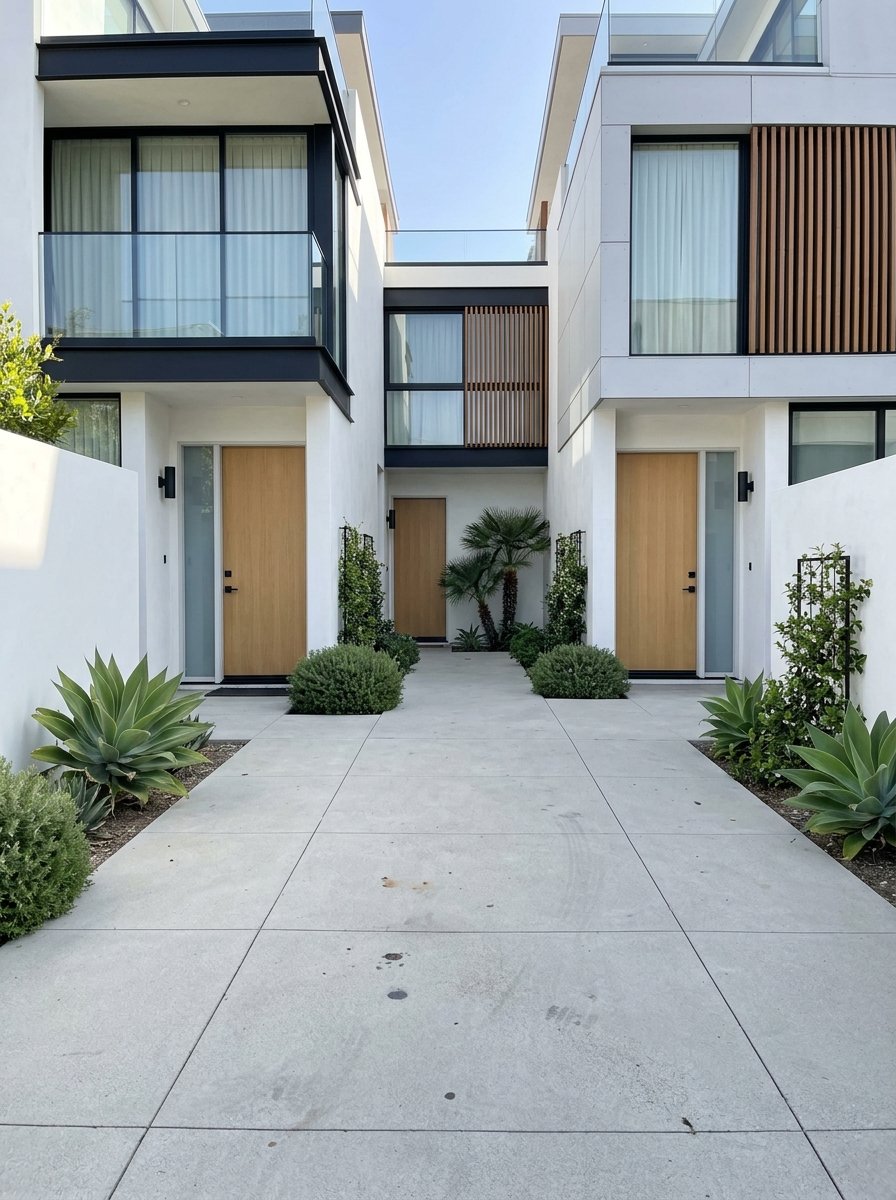
The biggest lifestyle difference is what you experience right outside your home. Instead of a curb, parked cars, and garage doors, you usually see a pedestrian path, front gardens, and a softer transition from public space to private space.
This layout often creates a calmer front-door setting. You get less vehicle activity at the front of the home, and the street can feel more like a shared garden lane than a standard residential block.
At the same time, privacy works differently here. The front yard acts as a buffer, but the public path is still close to the house, and the Venice Local Coastal Program limits fences, walls, and hedges in the public right-of-way to 42 inches. In practice, that means you may enjoy a sense of separation, but not complete seclusion.
Parking and access still matter
Walk streets may feel low-car, but they are not disconnected from the rest of the neighborhood. Rear alleys and courts remain important because they handle access to garages and private parking areas.
For many homes, the back of the lot is where your day-to-day driving life happens. The Local Coastal Program also notes that alleyways should remain clear for emergency vehicles, which adds to the practical role they play.
Parking pressure can still be part of the experience. The plan specifically points to beach-visitor parking conflicts and non-resident vehicle intrusion on residential streets, so even if the front path feels peaceful, parking logistics are still worth understanding when you are evaluating a property.
Location shapes the mood
Not every walk street feels the same from morning to evening. A lot depends on how close the home is to Venice Beach, Ocean Front Walk, and Abbot Kinney.
The City of Los Angeles Department of Recreation and Parks says Venice Beach and Ocean Front Walk attract 28,000 to 30,000 visitors daily and more than 10 million visitors annually. That level of visitor activity helps explain why some nearby blocks may feel fairly quiet early in the day, then more active on weekends and during busier periods.
Abbot Kinney Boulevard is another key influence. Discover Los Angeles describes it as a local destination for shops, restaurants, and nightlife, running from Washington Boulevard to Santa Monica’s Main Street. For homes near that corridor, the tradeoff is clear: you may gain quick access to dining and retail while giving up some of the seclusion found on more tucked-away streets.
North Venice and Milwood feel different
One common mistake is thinking all Venice walk streets offer the same experience. They do not.
The Venice Local Coastal Program sets different pedestrian path widths by area. In North Venice and the Peninsula, paths are generally 10 to 12 feet wide, while in Milwood they are 4.5 feet wide.
That difference changes how the street feels underfoot. Wider paths can read as more open, while narrower ones may feel more intimate and enclosed.
SurveyLA also identifies two especially important historic walk-street districts: the North Venice Walk Streets Historic District and the Milwood Venice Walk Streets Historic District. Each has its own texture, scale, and architectural mix, which is part of why buyers often have a strong preference once they begin touring both areas.
Architectural character is part of the appeal
The housing stock is one of the biggest reasons walk-street homes stand out. SurveyLA describes North Venice as a predominantly residential district with original homes built from about 1900 through the 1920s, often in Craftsman or Victorian vernacular styles.
In Milwood, many original residences were built from the teens through the 1930s and reflect a similar mix of Craftsman, Period Revival, and modest vernacular design. Later construction is also present, so the streetscape feels layered rather than frozen in one era.
The lots are typically modest, and setbacks are limited. That creates the dense, village-like texture that makes these blocks feel different from larger-lot coastal neighborhoods.
In North Venice, SurveyLA notes that buildings generally face wide concrete sidewalks that make up the walk streets. In Milwood, the report describes narrow concrete sidewalks, mature vegetation, and circular planting beds that help shape the streetscape.
More than one home type
Another reason these streets feel so visually interesting is that they are not defined by a single property type. Along with detached homes, the area includes bungalow courts, duplexes, cottages, and other early residential forms.
Marco Place Court is a strong example. The Los Angeles Conservancy identifies it as a Spanish Colonial Revival bungalow court within the Milwood Walk Street Historic District, with entrance access from the walk street and garages at the rear.
For buyers, that means more variety in layout and architectural style. For sellers, it reinforces the fact that walk-street living is about more than square footage alone. The setting and street experience are a major part of the value story.
Design rules help preserve the setting
Part of what keeps walk streets so distinctive is that their look and scale are actively protected. The Venice Local Coastal Program says new residential development along walk streets should complement existing materials, colors, massing, and scale.
It also calls for facades that engage pedestrians. Primary entrances and frequent windows should face the walk street, and features like front porches, bays, and balconies are encouraged.
There are also practical limits owners need to understand. Structures along walk streets are limited to 28 feet in height, and permanent encroachments in the public right-of-way require a revocable encroachment permit from the Department of Public Works.
For homeowners, that means the front yard is not just private decorative space. It is part of a shared public-facing environment, and changes to fences, landscaping features, or other elements may involve more oversight than they would on a conventional street.
What buyers should pay attention to
If you are considering a Venice walk-street home, it helps to look beyond the photos. The charm is real, but so are the tradeoffs.
As you tour homes, pay attention to:
- How close the front path sits to the main living areas
- Whether the street feels open or intimate based on path width
- Rear alley access and how parking works for the property
- Proximity to the beach, Ocean Front Walk, and Abbot Kinney
- The balance between privacy, activity, and convenience
- Any visible design features that may be part of a regulated frontage or right-of-way
For the right buyer, this combination is exactly the appeal. You are not just buying a home. You are buying a very specific Venice lifestyle built around pedestrian scale, architectural texture, and proximity to some of the neighborhood’s most recognizable destinations.
What sellers can highlight
If you own a home on a Venice walk street, your marketing should capture what makes this setting hard to replicate. These homes are compelling because they offer a rare combination of historic character, garden-forward frontage, and a front-door experience that feels different from a standard city block.
That lifestyle story matters. Buyers are often drawn to less car noise at the front door, the visual appeal of mature landscaping and low walls, and the sense of neighborhood enclosure these streets create.
At the same time, strong positioning should be honest and precise. It helps to show how the home relates to rear parking access, nearby amenities, and the specific character of its walk-street pocket.
For sellers in Venice, thoughtful presentation can make a meaningful difference. A team that understands coastal buyers, architectural positioning, and elevated digital marketing can help your home stand out in a way that matches its setting.
If you are thinking about buying or selling on Venice’s walk streets, working with a team that understands the nuance of these blocks can help you make smarter decisions and tell a stronger property story. Connect with Justin Dutchover Real Estate to explore Venice opportunities, prepare your home for market, or get expert guidance on coastal living.
FAQs
What are Venice walk streets in Venice, Los Angeles?
- Venice walk streets are public streets designed for pedestrian use across part of their width, with landscaped areas and no regular front vehicular access except for emergency vehicles.
Are Venice walk streets completely car-free for homeowners?
- No. The front of the street is pedestrian-priority, but garages and private parking are typically accessed from rear alleys or courts.
Do all Venice walk streets in Venice feel the same?
- No. North Venice and Milwood differ in pedestrian path width, lot patterns, vegetation, and architectural mix.
Is privacy good on Venice walk streets?
- Privacy is often better than on a conventional street with garages and driveways in front, but the public path is close to the home and front barriers in the right-of-way are kept relatively low.
Why are Venice walk-street homes so desirable?
- Buyers are often drawn to their pedestrian character, architectural variety, garden-oriented frontage, and proximity to the beach and Abbot Kinney.
What should homeowners know before remodeling a Venice walk-street property?
- Design changes may be more regulated than on a typical street because the walk-street setting is protected by planning rules related to scale, frontage, height, and public right-of-way use.