If you own an oceanfront home in Malibu, pricing it is rarely as simple as pulling a citywide average and adding a premium for the view. This is a thin, high-stakes market where one street can behave very differently from the next, and where frontage, access, views, permits, and timing can change buyer response fast. If you want to protect value and avoid a long run on market, the real advantage comes from understanding how Malibu oceanfront pricing really works. Let’s dive in.
Why Malibu Oceanfront Pricing Is Different
Malibu is a luxury market, but it is also a low-volume one. Public market snapshots from 2026 show a softer overall backdrop, with Zillow reporting an average Malibu home value of $3.18 million as of May 31, 2026, down 1% year over year, alongside 254 homes for sale and 44 new listings. Realtor.com described Malibu as a buyer’s market in May 2026, while Redfin reported a median sale price of $4.82 million, 92 median days on market, and low overall competition.
That broader picture matters, but it should not be the main pricing tool for an oceanfront property. Malibu beachfront inventory is too segmented for citywide averages to tell the full story. In many cases, one or two sales can shape the recent market picture for an entire pocket.
Recent neighborhood snapshots make that clear. Over the last three months, Redfin showed Malibu Road with 1 sale at a $6.9 million median sale price, Point Dume with 3 sales at $14.0 million, Malibu Colony with 1 sale at $4.55 million, and La Costa Beach with 1 sale at $4.3 million. When sample sizes are that small, broad averages can easily mislead sellers.
Start With the Right Comp Set
The most important step in strategic pricing is choosing the right comparable sales. For a Malibu oceanfront listing, that usually means looking at homes on the same stretch of coastline, with similar beach orientation, similar access, and similar physical constraints. A comp from another Malibu submarket may be interesting, but it is not automatically relevant.
You also need to compare like with like beyond square footage. In this segment, buyers often react more strongly to beach frontage, line of sight, driveway utility, privacy setup, and direct access than they do to an extra bedroom or a slightly larger interior. That is why the comp process has to be more precise than it would be for a typical non-waterfront home.
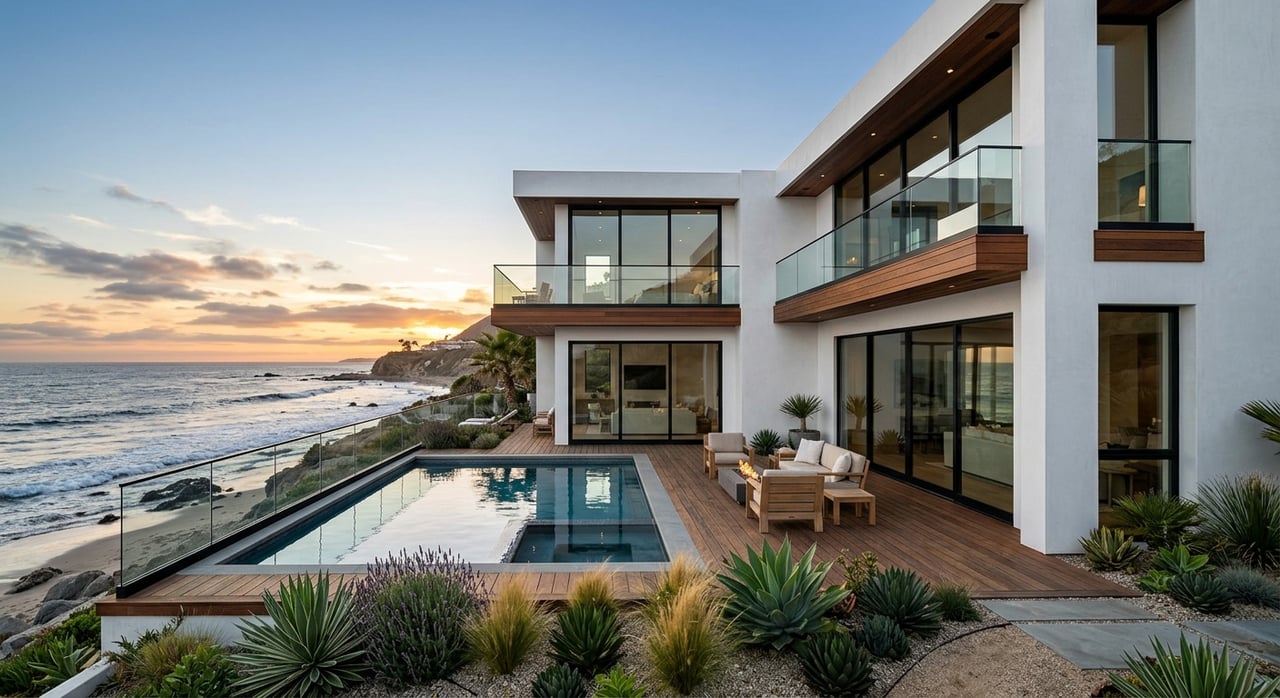
Current and recent property details help show what moves value. A Carbon Beach property at 22440 Pacific Coast Highway is described as having 40 feet of beach frontage, gated direct beach access, and a rare deep gated driveway. A Malibu Road and Broad Beach listing highlights 50 feet of private beachfront and proximity about 400 yards from the nearest public access. Those are pricing variables, not just marketing details.
Frontage Carries Real Weight
Beach frontage is one of the clearest value drivers for Malibu oceanfront homes. A wider frontage can expand views, improve outdoor usability, and create a stronger sense of separation from neighboring properties. In a market where buyers pay for scarcity, even a modest frontage difference can affect how a listing is perceived.
That is why two homes with similar interiors can command very different numbers. If one property offers a stronger stretch of sand exposure or a more open visual experience, buyers may treat it as a meaningfully better asset. Pricing should reflect that difference early, not after the market pushes back.
Access Changes Buyer Demand
Direct beach access and the ease of getting to the sand can also influence value. A gated path, private stairs, or a cleaner access setup can make the day-to-day experience feel more seamless. For many buyers, that utility becomes part of the emotional and financial equation.
Access should also be viewed in a broader regulatory context. The entire City of Malibu lies in the coastal zone under the Local Coastal Program, and the city has authority over coastal development permits. The city and the California Coastal Commission also use offers to dedicate public access easements for oceanfront projects, which can create features such as stairways, paths, blufftop trails, overlooks, and segments of the California Coastal Trail.
Treat Views as a Separate Asset
In Malibu, a view is not just a lifestyle feature. It can be a measurable part of value. That is especially true when line of sight is protected or formally recognized.
The City of Malibu has a Primary View Determination process that establishes primary view corridors, and once established, those corridors are binding on future owners. The city also maintains a process for preserving views that become blocked by foliage. For pricing purposes, that means your view profile should be considered separately from finishes, staging, or recent upgrades.
A beautifully renovated home with a compromised line of sight may not compete the same way as a more modest home with a stronger uninterrupted ocean view. Buyers in this segment often notice that difference immediately. Strategic pricing should account for the fact that not all oceanfront views are equal.
Price Renovation and Permitting Reality
Luxury buyers care about design and condition, but with Malibu oceanfront homes, they also care about what it took to get there and what future work may involve. That makes renovation quality only part of the story. Permit readiness, completed structural work, and coastal constraints can all shape what a buyer is willing to pay.
Malibu shoreline rules require setbacks and can trigger State Lands Commission review for shoreline development. The city’s 2026 Coastal Vulnerability Assessment highlights sea-level rise, tidal inundation, storm flooding, and coastal erosion through 2100. The city’s 2026 Safety Element update also centers wildfire, geotechnical safety, climate adaptation, evacuation planning, shoreline protection, and homeowner insurance implications.
In practical terms, that means risk and readiness are part of pricing, not just disclosures. A property with completed seawall or foundation work may present differently than one with unresolved future questions. Listing descriptions already reflect this reality, with one Broad Beach home marketing brand-new 2026 construction on the sand, while a Malibu Road property highlights completed foundation and seawall work.
Finished Work Can Support Pricing
When meaningful work is already complete, sellers may have a stronger case for premium positioning. Buyers often place value on certainty, especially in coastal environments where approvals and construction can be more involved. If a home combines strong design with completed hard-cost items, that can improve pricing confidence.
That said, the market still has the final say. Even a well-prepared property needs to meet current buyer expectations on price. In a slower market, overreaching can erase the advantage of completed improvements.
Days on Market Matter in Malibu
In an ultra-specific market, pricing mistakes tend to show up in time on market. Once a listing sits, buyers may begin to see it as negotiable, even if the home is exceptional. That can weaken leverage and invite offers below where the property might have landed with a sharper launch.
Redfin snapshots across Malibu beachfront submarkets show homes selling about 3% to 7% below list and taking roughly 66 to 85 days to go pending, with multiple offers described as rare. One recent Malibu Road sale offers a cautionary example: it closed at $9.0 million after being listed at $10.85 million and spending 363 days on market. That is exactly why strategic pricing should be validated early.
The goal is not to underprice a rare asset. The goal is to enter the market at a number buyers can defend with the best available comps and property-specific features. In Malibu, preserving momentum often protects value better than chasing an aspirational list price.
Use Private Testing to Validate Price
For many Malibu oceanfront sellers, the smartest launch is not always a full public debut on day one. A private marketing phase can help test pricing, gather feedback, and build interest before public days on market start to accumulate. That flexibility can be especially useful for unique properties where the right buyer pool is narrow.
Compass notes that listing as a Private Exclusive allows sellers to test price, collect insights, and build anticipation before going public, with access to a network of 340,000 agents. Compass also reports that its pre-marketed listings closed 2.9% higher on average, went 20% faster to contract, and were 30% less likely to drop in price, while also noting that correlation does not necessarily equal causation.
For a Malibu oceanfront home, that staged approach can create useful market intelligence. If early response is strong, you gain confidence in your pricing. If response is muted, you can refine positioning before the public listing history becomes a factor.
Prep Work Can Improve the Launch
Some properties need more than pricing strategy. They need presentation strategy too. If the home would benefit from staging, painting, flooring, landscaping, or cosmetic renovation, handling that work before a public launch may improve both demand and pricing strength.
Compass Concierge fronts the cost of services such as staging, flooring, painting, landscaping, and cosmetic renovations until closing. Compass also says sellers can begin privately, move into a Coming Soon phase, and then launch publicly once the home is ready. For Malibu oceanfront owners, that can support a more controlled and polished market entry.
Price Discipline Wins in a Softer Market
The top end of the luxury market still has active buyers. Compass’s 2025 Ultra-Luxury Report says Greater Los Angeles posted 53.7% year-over-year growth in $10 million-plus transactions. That is an important reminder that exceptional homes can still move, even when broader local conditions feel softer.
At the same time, wider market normalization supports a disciplined approach. Compass’s 2026 market outlook says the U.S. market is moving toward normalization, with prices flattening and inventory rising modestly. For Malibu oceanfront sellers, that makes staged validation and accurate pricing more important than relying on broad momentum.
The strongest pricing strategy usually follows a clear order:
- Build the comp set using the most relevant same-stretch and same-access sales
- Adjust for frontage, view profile, and beach access
- Account for renovation quality, completed structural work, and permitting reality
- Factor in hazard exposure and buyer sensitivity to long-term coastal risk
- Choose a launch plan that tests the market before stale listing history builds up
What Strategic Pricing Really Means
Strategic pricing is not about picking a bold number and hoping the market catches up. It is about reading a highly segmented Malibu oceanfront landscape and aligning your launch with how buyers actually evaluate value. In this market, precision matters more than volume, and positioning matters more than guesswork.
If you are thinking about selling, the most useful question is not just, “What is my home worth?” It is, “How will buyers compare my home, and what price can the market validate before momentum fades?” Answer that well, and you give yourself a much better chance of protecting both time and proceeds.
If you want a pricing strategy built around Malibu’s beachfront micro-markets, modern marketing, and a polished launch plan, connect with Justin Dutchover Real Estate.
FAQs
How should you price a Malibu oceanfront home?
- You should price a Malibu oceanfront home using highly specific comps from the same stretch of coastline, then adjust for frontage, views, access, renovation level, and permit or hazard-related factors.
Why are citywide Malibu home prices not enough for oceanfront pricing?
- Malibu oceanfront sales volume is very small, and recent submarket data shows that one or two sales can shape an entire neighborhood snapshot, making broad citywide averages too blunt for a beachfront listing.
What features add the most value to a Malibu beachfront property?
- Some of the most important value drivers are beach frontage, direct beach access, line of sight to the ocean, completed structural or shoreline work, and the overall readiness of the property for a buyer.
How long do Malibu oceanfront homes usually take to sell?
- Recent Redfin submarket snapshots show Malibu beachfront homes often taking about 66 to 85 days to go pending, with many selling around 3% to 7% below list and multiple offers being rare.
Can Private Exclusives help with Malibu luxury home pricing?
- Yes, a private launch can help test price, gather buyer and agent feedback, and refine strategy before public days on market begin to affect negotiating leverage.
Why do permits and coastal rules matter for Malibu oceanfront value?
- Coastal development rules, shoreline setbacks, possible review requirements, and long-term coastal hazard considerations can affect buyer risk, renovation timelines, and what the market is willing to pay.