Trying to choose between a classic Venice bungalow and a modern coastal home? In Venice, that decision is not just about style. It shapes how you live, how much space you get, what kind of upkeep you should expect, and how much flexibility you may have down the road. If you are weighing both options, this guide will help you compare character, layout, maintenance, and resale factors so you can move forward with more confidence. Let’s dive in.
Venice Housing Mix
Venice stands out because its housing stock is unusually varied. SurveyLA documented intact 1920s bungalow courts, early Craftsman homes, and later Late Modern single-family properties, all within the same broader community.
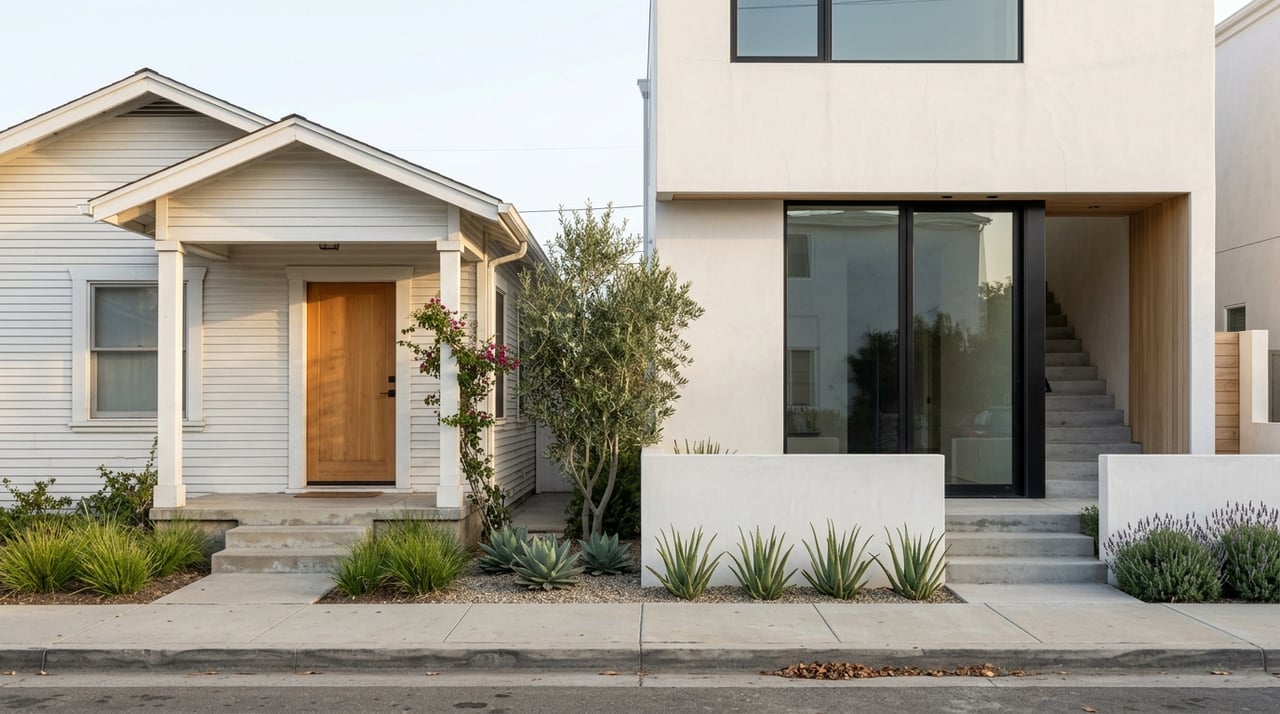
That mix is a big reason buyers are often torn between older charm and newer design. In one part of Venice, you may find a compact 1920s bungalow with a yard and detached structure. A few blocks away, you may see a multi-level modern home with large windows, a rooftop deck, and a garage.
Venice also comes with an extra layer of planning context. According to Los Angeles City Planning, about 85% of the Venice Community Plan Area is in the Coastal Zone, which means additions, rebuilds, and some exterior changes may be subject to additional review under local coastal regulations.
From a market perspective, Venice remains a premium coastal market. In spring 2026, public market trackers placed the median sale price at roughly $1.9 million to $2.1 million, with reported days on market ranging from about 50 to 79 days depending on the source.
Classic Venice Bungalows
Classic Venice bungalows are usually the smaller-scale option. They often trade interior square footage for charm, outdoor space, and long-term upside.
Current public listing examples show what that can look like in real life. A 1924 bungalow on Coeur D Alene Avenue offered 710 square feet on a 4,202 square foot lot, while a 1924 bungalow on California Avenue offered 912 square feet plus a separate one-bedroom ADU on a 5,391 square foot lot.
Why Buyers Love Bungalows
If you are drawn to history and personality, a bungalow can be hard to beat. These homes often appeal to buyers who want original character, a more intimate scale, and a home that feels distinctly tied to Venice’s past.
They can also offer a different kind of value story. Even when the house itself is modest in size, the lot or accessory space may create room for future improvements, ADU potential, or a thoughtful back-house setup, depending on the property and applicable rules.
What Daily Living Feels Like
Bungalow living in Venice often centers on outdoor spaces in a smaller, more relaxed way. Instead of oversized entertaining areas, many properties rely on porches, modest yards, or shared-courtyard layouts.
That setup can appeal to buyers who care more about atmosphere than square footage. In the Milwood Walk Street district, for example, Marco Place Court is organized around a shared courtyard and accessed by pedestrian-only walk streets, showing how some bungalow environments prioritize greenery and connection over private bulk.
What to Watch For
Older homes can come with more upkeep. Because many Venice bungalows were built before 1978, renovation planning should account for lead-safe practices and the potential presence of older building materials such as asbestos.
Venice’s coastal setting matters too. FEMA notes that salt spray and moisture can accelerate corrosion and decay, which means exterior materials, hardware, and aging components may need closer attention over time.
Modern Coastal Homes
Modern coastal homes in Venice usually focus on openness, light, and indoor-outdoor flow. If your priority is turnkey living and more contemporary design, this category may feel like the clearer fit.
Recent public listing examples reflect those traits. A 2013 home on Pacific Avenue featured an ocean-view rooftop deck and a two-car garage, while a Venice Beach townhouse on Venice Boulevard offered an open-concept upper level, skylights, a central atrium courtyard, and oversized windows.
Why Buyers Choose Modern
Modern homes often attract buyers who want a move-in-ready experience. Open rooms, larger windows, rooftop spaces, and integrated outdoor areas can make everyday living feel easier and more flexible.
These homes also tend to match the expectations of buyers who entertain often or work from home. A more open floor plan can create better flow for hosting, while multiple levels or larger rooms may offer more options for privacy and function.
Comfort and Efficiency Benefits
Newer construction can also have practical advantages. Modern building envelopes are better positioned to include features like air sealing, insulation, and high-performance windows, which can improve comfort and durability.
That does not mean modern homes are maintenance-free. In a coastal setting like Venice, moisture, salt air, and corrosion still matter, especially for outdoor hardware, metal components, and exposed exterior features.
Why Modern Design Fits Venice
Venice has long been associated with creative and experimental architecture. The neighborhood’s design culture helps explain why contemporary homes feel natural here rather than out of place.
For many buyers, a modern Venice home offers a lifestyle that feels streamlined and current. You get bold design, stronger indoor-outdoor connection, and often a more immediate sense of convenience.
Bungalows Vs Modern Homes
If you are deciding between the two, it helps to compare them side by side through the lens of how you actually want to live.
| Feature | Venice Bungalow | Modern Coastal Home |
|---|---|---|
| Typical appeal | Historic character and smaller scale | Turnkey feel and open design |
| Interior layout | Compact rooms and traditional flow | Open-concept spaces and larger sightlines |
| Outdoor living | Yard, porch, or shared court feel | Rooftop decks, terraces, and outdoor rooms |
| Maintenance outlook | Older systems may need more attention | Newer systems may reduce near-term concerns |
| Improvement potential | May offer ADU or renovation upside | Often already optimized for current living |
| Buyer fit | Character-focused and flexible buyers | Convenience-focused and design-driven buyers |
This is not always a strict either-or choice. Venice also has hybrid properties, including modernized bungalow rebuilds that preserve the spirit of an older home while adding updated finishes, skylights, larger great rooms, and stronger indoor-outdoor flow.
How To Narrow Your Choice
When buyers feel stuck between bungalow charm and modern ease, the best next step is to focus on priorities, not just aesthetics. The home that looks best in photos is not always the one that fits your daily life.
Choose a Bungalow If You Want Character
A classic bungalow may be the better fit if you value architectural personality, smaller-scale living, and the chance to improve a property over time. Venice examples show that even compact homes can have meaningful lot value or accessory-space potential.
This option can be especially appealing if you like the idea of customizing a property gradually. You may give up square footage or immediate polish, but gain a home with more individuality.
Choose Modern If You Want Convenience
A modern coastal home may make more sense if you want open living, larger windows, bigger entertaining spaces, and fewer immediate system concerns. Buyers who prioritize a turnkey experience often lean this way.
This path can also feel simpler if you do not want to take on a renovation project. Many modern homes already deliver the features buyers ask for most, including garages, decks, and bright open interiors.
Check Coastal Rules Early
In Venice, planning for future changes should happen early, not after you fall in love with a property. Because so much of the area falls within the Coastal Zone, projects such as adding square footage, changing rooflines, or altering the exterior can involve extra local review.
That matters whether you are buying an older bungalow to improve or a home you may want to expand later. Reviewing the property’s coastal status up front can save time and avoid surprises.
Resale Considerations In Venice
Both styles can perform well in Venice, but they often appeal to different buyer pools. Bungalows may attract buyers looking for charm, lot potential, and a more classic neighborhood feel, while modern homes often draw buyers focused on design, convenience, and immediate lifestyle appeal.
Resale strength often comes down to execution. A well-maintained bungalow with thoughtful updates and useful outdoor space can compete very well, just as a modern home with strong light, functional layout, and durable finishes can stand out in a crowded field.
This is where local strategy matters. In a market as design-sensitive and high-value as Venice, presentation, pricing, and buyer targeting can shape the outcome as much as the property type itself.
Which Venice Home Fits You Best
If you love warmth, history, and the idea of making a home your own, a Venice bungalow may be the right move. If you want clean lines, larger entertaining spaces, and a more turnkey experience, a modern coastal home may suit you better.
The good news is that Venice offers both, plus some compelling in-between options. If you want help sorting through what fits your lifestyle, budget, and long-term goals, connect with Justin Dutchover Real Estate for expert guidance on Venice’s coastal market.
FAQs
What is the main difference between Venice bungalows and modern coastal homes?
- Venice bungalows usually offer older architectural character, smaller interior footprints, and possible improvement upside, while modern coastal homes usually offer open layouts, larger windows, newer finishes, and a more turnkey feel.
Are Venice bungalows usually smaller than modern homes?
- Yes. The public listing examples in the research show bungalow sizes such as 710 and 912 square feet, while modern homes in Venice often emphasize multi-level layouts, larger living areas, and expanded outdoor spaces.
Do Venice homes face extra coastal review?
- Often, yes. Los Angeles City Planning says about 85% of the Venice Community Plan Area is in the Coastal Zone, so additions, rebuilds, and some exterior changes may be subject to added local review.
Are modern coastal homes easier to maintain in Venice?
- They can be easier in the near term because newer construction may include more current building systems and better enclosure features, but Venice’s salt air and moisture still create corrosion and wear risks over time.
Can a Venice bungalow have ADU potential?
- Some can. The research includes examples of bungalow properties with a separate ADU or back-house configuration, showing why buyers often see bungalows as flexible properties with future upside.
Is Venice still a competitive housing market?
- Venice remains a high-priced market. In spring 2026, public sources placed the median sale price at roughly $1.9 million to $2.1 million, though reported pace varied by source.